
How Hiking Cultivates Environmental Awareness in Students
12/22/2025
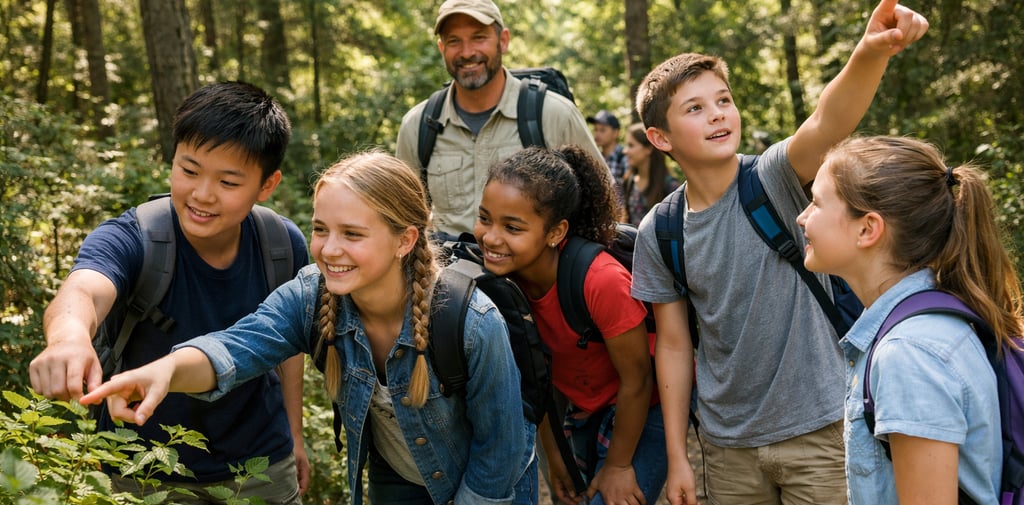
As physical education teachers, we often focus on the fitness benefits of hiking: cardiovascular endurance, muscular strength, and coordination. But hiking offers something equally valuable that deserves our attention — the opportunity to develop genuine environmental awareness in our students. When young people walk through forests, along rivers, or across hills, they encounter the natural world in ways that simply cannot be replicated in a classroom or gym.
This article explores practical strategies for weaving environmental education into your hiking lessons, transforming a physical activity into a meaningful connection with nature.
Why hiking works for environmental education
There is something powerful about learning while moving. When students are physically engaged on a trail, their minds become more receptive to new experiences and observations. Unlike sitting in a classroom watching a documentary about nature, hiking places students directly within the environment. They feel the temperature change as they enter a forest canopy, hear birdsong shift throughout the day, and notice how vegetation changes with altitude or proximity to water.
This embodied experience creates lasting memories and deeper understanding. Research consistently shows that direct contact with nature increases environmental concern and pro-environmental behaviour in young people. As PE teachers, we are uniquely positioned to facilitate these experiences.
Practical strategies for the trail
Sensory awareness exercises
Begin each hike with a brief sensory grounding activity. Ask students to stand still for two minutes with their eyes closed. Have them count how many different sounds they can identify. Then ask them to open their eyes and notice five things they had not seen before. This simple exercise shifts students from "getting through" the hike to actually being present in the environment.
During rest breaks, introduce focused observation tasks. Challenge students to find three different leaf shapes, identify animal tracks or signs, or locate evidence of human impact on the landscape. These micro-challenges maintain engagement while building observational skills.
Leave No Trace as lived practice
Rather than simply lecturing about Leave No Trace principles before a hike, integrate them as ongoing practice throughout. When you stop for a snack, ask students to examine the spot before and after — can anyone tell you were there? Make it a group challenge to leave each rest area in better condition than you found it.
Discuss the reasoning behind each principle as situations arise naturally. When a student wants to pick an interesting flower, use it as a moment to explore what happens when everyone takes "just one." When you encounter litter left by others, involve students in removal and discuss the persistence of different materials in the environment.
Wildlife awareness and respect
Teach students to recognize signs of wildlife even when animals are not visible: tracks, scat, feeding sites, nests, and burrows. This detective work is inherently engaging and helps students understand that the landscape is inhabited by creatures going about their lives.
Equally important is teaching appropriate behavior around wildlife. Discuss why maintaining distance matters, how human presence affects animal stress levels, and the importance of not feeding wild animals. These lessons in respect translate directly into environmental ethics.
Addressing the urban context
Not every school has access to wilderness areas, but environmental awareness can be cultivated on urban hikes as well. City parks, river corridors, and even street tree routes offer opportunities for observation. Urban hikes can explore questions like: Where does rainwater go? What plants survive in pavement cracks? How do animals adapt to city life?
The contrast between built and natural environments often raises powerful questions about land use, green space, and the relationship between human communities and nature.
The lasting impact
Students who develop environmental awareness through hiking carry something valuable beyond any single lesson. They learn to pay attention to the world around them, to see themselves as part of larger ecological systems, and to feel genuine connection with natural places. These are foundations for environmental stewardship that will influence their choices and behaviours throughout their lives.
As PE teachers, we have the privilege of taking students outside, away from screens and walls, into environments where this learning can happen naturally. By being intentional about how we structure these experiences, we help cultivate not just healthier bodies but more environmentally conscious citizens.
The trail is our classroom. Let us use it well.
© 2025. All rights reserved.
Keep in Touch
The project “HikeWise” is co-funded by the Erasmus+ Programme of the European Union. The views expressed in the working papers, deliverables and reports are those of the project consortium partners. These views have not been adopted or approved by the Commission and should not be relied upon as a statement of the Commission’s or its services’ views. The European Commission does not guarantee the accuracy of the data included in the working papers and reports, nor does it accept responsibility for any use made thereof.


Project Number: 2024-1-ES01-KA220-SCH-000246218