Safety on the Trail: Essential Rules for Hiking Activities with Students
4/27/2026
Hiking activities with students can become some of the most valuable educational experiences: they take learners out of the classroom routine, get them moving, help them develop autonomy, and connect them directly with nature. But precisely because these activities take place in an open, dynamic, and sometimes unpredictable environment, safety must be the teacher’s first concern. A successful hike is not only enjoyable and educational, but also carefully planned, adapted to the group, and responsibly managed throughout the route. Official guidance for outdoor activities and hiking consistently emphasizes the same key principles: choosing a route suitable for the group, assessing risks, monitoring the weather, ensuring appropriate equipment, and being prepared for unexpected situations.
The first step in safety begins before departure. The teacher must choose a route appropriate to the students’ age, level of endurance, and previous experience. The general recommendation in hiking guidance is simple: the route should be one that the entire group can complete safely and confidently, not just the fittest participants. In addition, it is important for the teacher to know the characteristics of the trail in advance: its length, elevation gain, exposed sections, slippery areas, water sources, phone signal coverage, and possible exit points. In the field of educational visits, health and safety authorities recommend that such outings be preceded by a balanced risk assessment, not by excessive avoidance of outdoor activities.
One essential rule is to adapt the activity to weather conditions. Weather can quickly turn an easy route into a risky setting. High temperatures increase the risk of dehydration and heat-related illness, and public health guidance recommends careful planning of outdoor activities, avoiding the hottest hours of the day, ensuring frequent hydration, and pacing physical effort properly. For students, this means regular breaks, observation of signs of fatigue, and cancelling or shortening the hike when conditions are no longer safe. Equipment must also match the season: layered clothing, rain protection, a hat, sunscreen, and footwear appropriate for the terrain.
Hydration and nutrition are often underestimated, even though they are fundamental components of safety. Official hiking sources stress that water should be consumed before, during, and after physical effort, without waiting until thirst appears. In hot conditions, water needs may increase significantly. With student groups, the teacher should not assume that every child will manage this independently, but should include regular checks: who has had water, who seems tired, and who may be showing signs of overheating or dizziness. Light and nutritious snacks can help maintain both energy and attention on the trail.
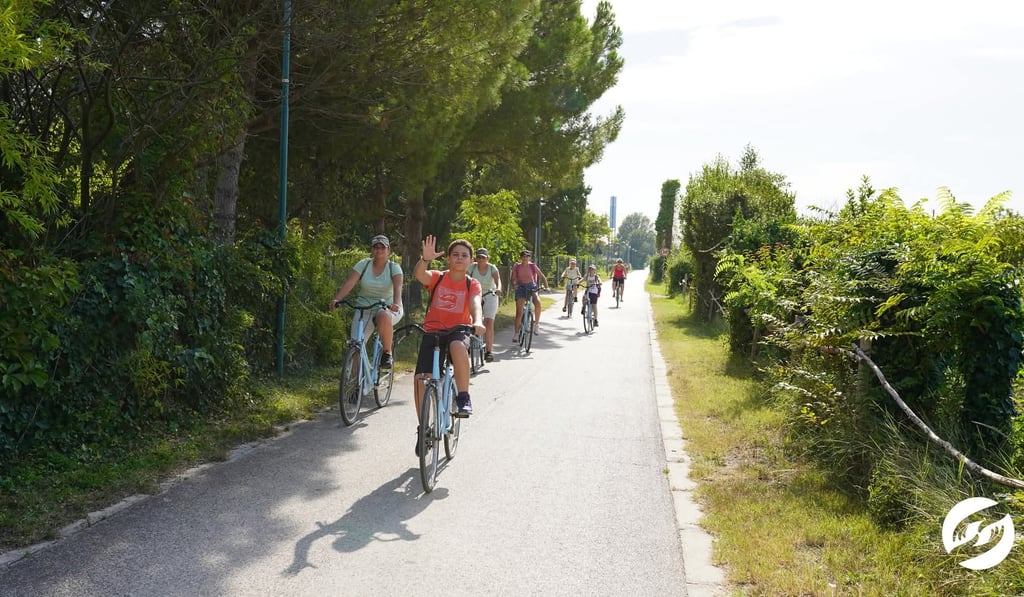
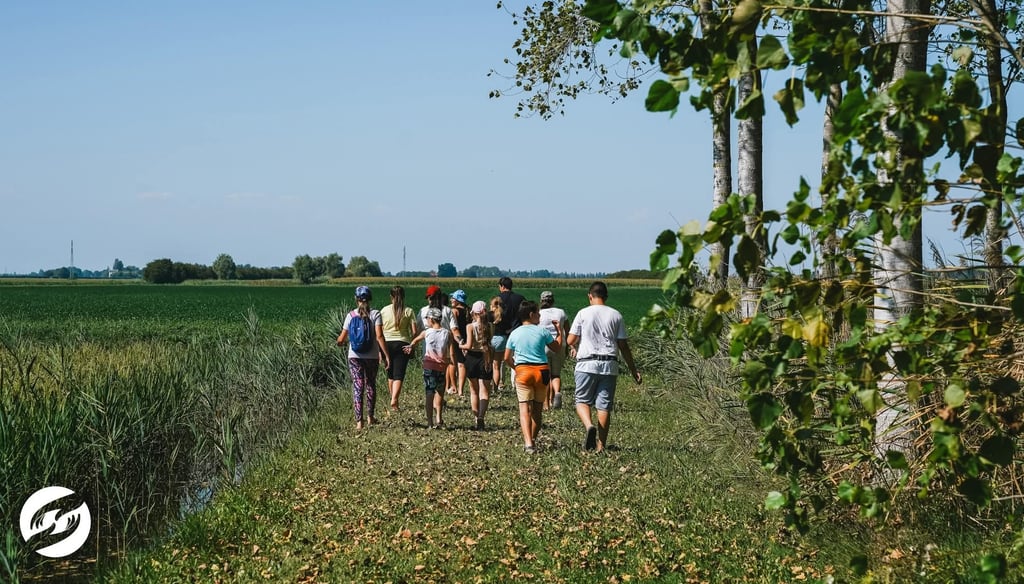
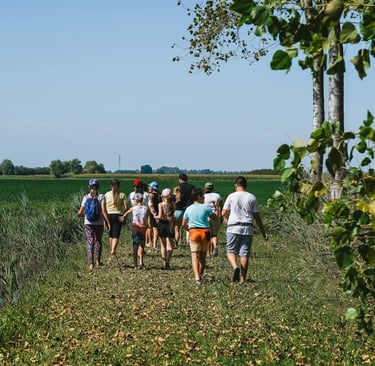
Another important principle is keeping the group together. In hikes with students, the pace should be set according to the slowest participants, not the fastest. Hiking guidance for groups recommends staying on marked trails and maintaining a clear group structure, so that no student walks too far ahead or falls far behind. In practice, the teacher can establish simple and clear rules from the start: no one goes beyond the adult-designated lead person, no one leaves the trail without permission, and stops are made only when instructed. These rules reduce the risk of students getting lost and help maintain control in a calm and predictable way.
Safety also means being prepared for minor incidents. A well-equipped first aid kit is essential, and hiking recommendations include basic items for small wounds, blisters, scratches, mild sprains, or insect bites. In addition, the “Ten Essentials” list promoted by the National Park Service highlights the importance of core items for navigation, sun protection, food, water, extra clothing, lighting, and emergency response. For school groups, this does not mean that every student must carry complex technical gear, but that the activity leader should have everything needed to respond promptly to both routine and unexpected situations.
In wooded areas or places with tall vegetation, protection against ticks and insects must be taken seriously. Public health guidance recommends walking in the center of the trail, avoiding tall grass and dense brush, using approved repellents, and checking the body, clothing, and equipment after outdoor activities. For student activities, this translates into simple and clear instructions before departure, as well as a brief routine check at the end of the outing, especially during the warm season.
A separate area of concern is safety near water, steep slopes, or slippery surfaces. Hiking authorities are clear: fast-moving water, wet rocks, unstable banks, and unsafe crossings should be avoided. In activities with students, caution must be even greater than in individual hiking. Not every scenic point is suitable for a group stop, and sometimes the most responsible educational decision is to avoid a particular section of the route altogether. Safety does not reduce the value of the experience; on the contrary, it makes the experience possible.
It is equally important to build a culture of responsibility. Students need to understand that safety on the trail does not depend only on the adult leader, but also on the behavior of every participant. Walking carefully, following instructions, reporting problems immediately, not pushing, not running on uneven ground, and not leaving the group are basic rules that should be explained before departure and reinforced along the way. In outdoor education, prevention works best when rules are not simply imposed formally, but genuinely understood and accepted.
At the same time, safety should be linked to respect for nature. “Leave No Trace” principles recommend using existing trails, walking in single file along the center of the path, even when it is muddy, and avoiding damage to fragile natural areas. These rules protect not only the environment, but also the group, because they reduce the risk of getting lost, slipping, or having accidents off-trail. In this way, responsible behavior becomes a double lesson: one in safety and one in environmental education.
For the teacher, one of the most important responsibilities is remaining flexible. Even the best-prepared route may require adjustments: one student gets tired more quickly, the weather changes, the terrain proves more difficult than expected, or the group needs more breaks. Safe leadership outdoors does not mean rigidity, but the ability to make calm, timely decisions in the best interest of all participants. Organizations specializing in outdoor education and risk management emphasize exactly this combination of preparation, qualified supervision, risk assessment, and adaptation to real conditions in the field.
In conclusion, safety on the trail is not an administrative detail or a secondary stage of the activity, but the foundation on which the entire hiking experience with students is built. When the route is well chosen, the rules are clear, the equipment is appropriate, and the teacher remains attentive to the pace and needs of the group, hiking becomes an exceptional educational context. Students learn to move responsibly, to take care of themselves and others, to respect nature, and to understand that the freedom of exploration always goes hand in hand with a commitment to safety.
Bibliography
Centers for Disease Control and Prevention. Protect Yourself From the Dangers of Extreme Heat. Updated June 25, 2024.
Centers for Disease Control and Prevention. Heat and Athletes. Updated June 25, 2024.
Centers for Disease Control and Prevention. Sun Safety Facts. Updated February 10, 2026.
Centers for Disease Control and Prevention. Preventing Tick Bites. Updated August 28, 2024.
Centers for Disease Control and Prevention. Preventing Lyme Disease. Updated April 6, 2026.
National Park Service. Hike Smart. Published June 13, 2024.
National Park Service. The 10 Essentials. Published July 19, 2023.
National Park Service. Day Hike Preparation. Published May 22, 2023.
National Park Service. Leave No Trace Seven Principles. Published June 16, 2022.
Health and Safety Executive. School trips. Updated October 9, 2024.
UK Government. Health and safety on educational visits. Published November 26, 2018.
© 2025. All rights reserved.
Keep in Touch
The project “HikeWise” is co-funded by the Erasmus+ Programme of the European Union. The views expressed in the working papers, deliverables and reports are those of the project consortium partners. These views have not been adopted or approved by the Commission and should not be relied upon as a statement of the Commission’s or its services’ views. The European Commission does not guarantee the accuracy of the data included in the working papers and reports, nor does it accept responsibility for any use made thereof.


Project Number: 2024-1-ES01-KA220-SCH-000246218