The Physical and Mental Benefits of Hiking for Students
How Outdoor Activity Boosts Well-being, Concentration, and Social Skills
2/27/2026
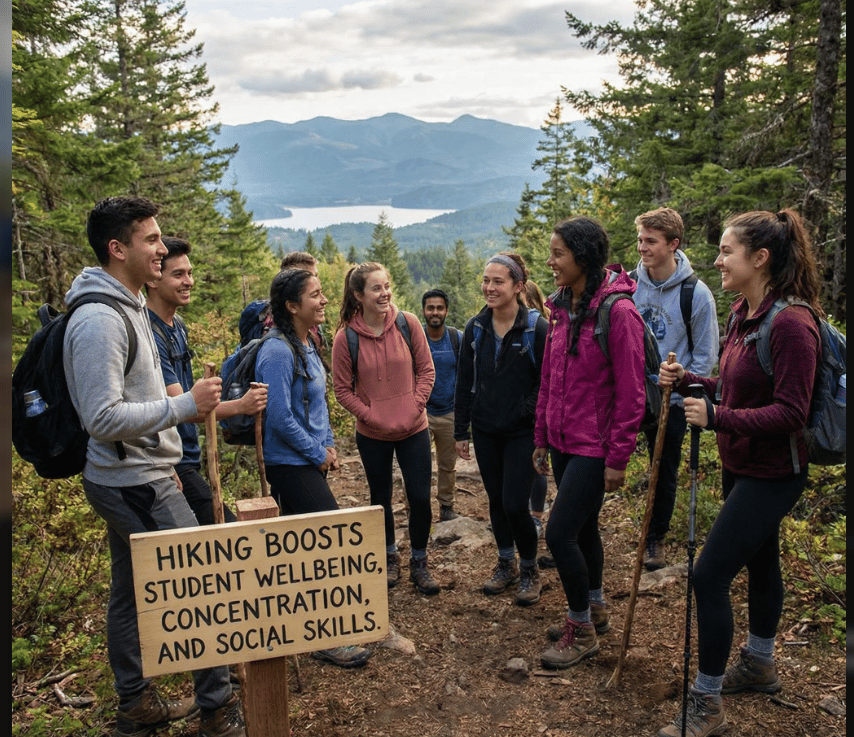
In recent years, many teachers have noticed that students spend more time indoors and in front of screens. Because of this change, outdoor activities are becoming more important in school education. One simple but powerful activity is hiking. It can support students’ physical and mental development at the same time.
Hiking is not only a sport. It is also a learning experience. When students go hiking, they use their whole body. Walking on different types of ground helps improve balance, strength, and coordination. Regular hiking can also support heart health and increase energy levels. After spending time outdoors, many students feel more active and refreshed.
At the same time, nature has a calming effect. When students walk in a forest or natural area, they are away from noise and daily pressure. This helps them feel less anxious and more relaxed. Fresh air and natural light also have a positive effect on their well-being. As a result, students often return to the classroom in a better emotional state.
Research and classroom experience show that after outdoor activities, students often come back with better concentration. Hiking encourages observation and curiosity. Students start to notice small details in nature, such as different plants, sounds, or changes in the landscape. Paying attention to these details supports their thinking skills. Research highlighted in the Frontiers in Psychology collection “The Natural World as a Resource for Learning and Development: From Schoolyards to Wilderness,” edited by researchers such as Dr. Ming Kuo, also shows that learning in natural environments can help restore attention and improve engagement. In her research on nature and attention, Dr. Kuo explains that time spent in natural settings supports students’ ability to focus and stay mentally alert after outdoor experiences. In this way, outdoor learning can also support academic success. When students feel calm and focused, they are more ready to learn.
Hiking also supports social development. It is usually done in groups, so students walk together, help each other, and share responsibilities. They learn to communicate and cooperate in a natural way. For example, they may need to support a classmate on a difficult path or make decisions together. These small experiences build trust and improve teamwork skills.
In addition, outdoor activities create positive memories. When students share experiences in nature, their relationships become stronger. They feel more connected to each other.
Finally, hiking helps students develop respect for the environment. When they experience nature directly, they understand why it is important to protect it. Through simple actions, such as keeping the area clean or observing plants and animals carefully, students learn responsibility in a practical way.
Overall, hiking supports students in many different ways. It improves physical health, increases concentration, strengthens social skills, and builds environmental awareness. In projects like HIKEWISE, outdoor learning becomes an important part of education. It reminds us that active learning can lead to active living. Sometimes, the best classroom has no walls — only trees, fresh air, and a walking path.
© 2025. All rights reserved.
Keep in Touch
The project “HikeWise” is co-funded by the Erasmus+ Programme of the European Union. The views expressed in the working papers, deliverables and reports are those of the project consortium partners. These views have not been adopted or approved by the Commission and should not be relied upon as a statement of the Commission’s or its services’ views. The European Commission does not guarantee the accuracy of the data included in the working papers and reports, nor does it accept responsibility for any use made thereof.


Project Number: 2024-1-ES01-KA220-SCH-000246218